Susana Ruberte

Susana Ruberte, Aragon's first female oenologist

“In the winery we always have to be testing, innovating and improving every day”

Ha formado a 687 alumnos, catado vino de 55 países vinícolas y 679 denominaciones de origen y ha degustado 296 variedades de uva. Este es el extraordinario palmarés que ha conseguido, en tan solo siete años, el aragonés Jorge Orte Tudela.

When and where did you study?

I started studying oenology in 1979. I spent three years in Madrid at the Escuela del Vino where I trained as a winemaker. I had previously completed a professional chemistry training in Barcelona.

Where does your passion for wine come from?

My father is the “culprit” of my passion for wine.  He was the one who instilled in me the love for this profession. As a child, I always saw him “on the job”: racking, blending wines and looking for a good wine that would please their customers. I loved being with him, I could spend hours watching what he was doing. We spent a lot of time together in the laboratory and he would leave me in charge of the analysis. They were insignificant tasks, but they made me feel very good, I felt that it was a great responsibility and I was always with all five senses attentive to everything that was “cooking” there.

At first, my parents sent me to study Administration in Zaragoza, but I have to admit that being surrounded by papers has never been my thing. So one day I told them what my true passion was: to study oenology and follow in my father’s footsteps. They always supported me in my decision, despite the doubts they had at first. You have to bear in mind that the world of wine has always been mainly masculine and even more so in those years. Oenology was not considered a profession for women.

Your daughters, Alicia y Ana are now helping you in the winery, what is the best advice you have given them?

At the moment, my youngest daughter, Ana, who has also studied a degree in oenology, is with me. In her case, she studied in Cariñena.

I have always tried to convey that the most important thing is to do what you are passionate about. If you work in something that you like and you enjoy what you do, it is not a job, but a pleasure. For this reason, I always try to instil in them the passion that I have, although there are times when it is very hard.
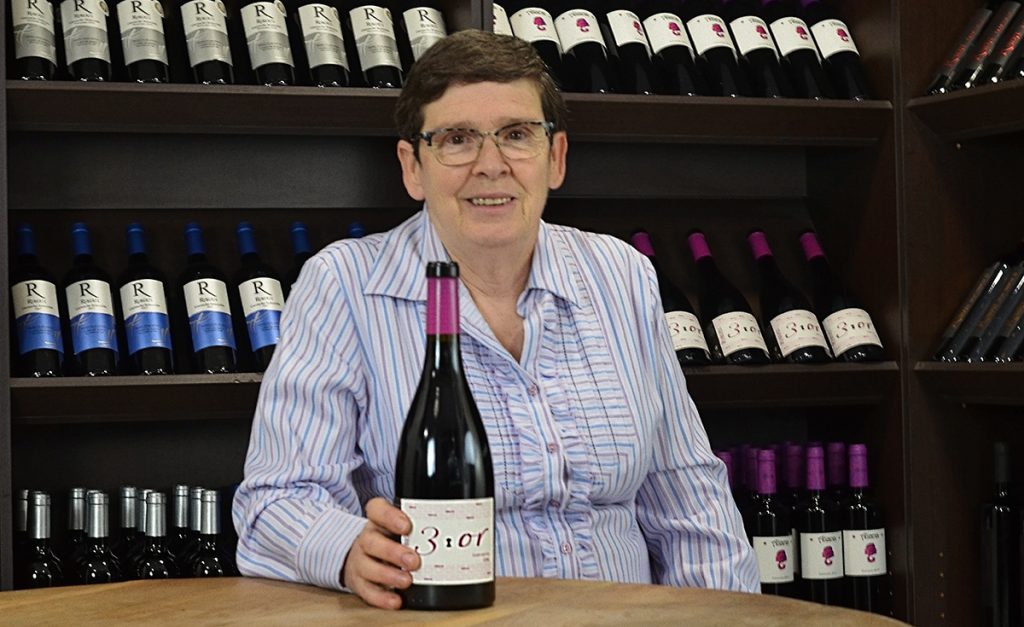
Susana Ruberte is the first female winemaker in Aragon and is the head of Bodegas Ruberte, belonging to the Campo de Borja Protected Designation of Origin. Since 2016, she also runs Bodegas Monasterio de Veruela, dedicated to the production of cava and also located in the town of Ainzón in the Zaragoza region. Veruela Monastery belongs to the Cava Designation of Origin and part of its space is underground caves covering some 600 square meters. With this project, in which Ana, one of her daughters is directly involved, Susana fulfilled one of her dreams: to be able to make cava in her own winery.

Ruberte, a great passionate about viticulture and everything that surrounds it, is also closely linked and committed to the solidarity actions carried out by the community around wine, such as the annual challenge of Diviñas Women, which she always attends or participates in.

What is your main job in the winery?

At the moment, I do more management work than oenology, although I am always looking after the winemaking process and the vineyards. I love the harvest season, which for us is the most important time of the year. Each season, the grapes arrive in different conditions and you have to give your best to get the best wines. In the winery, 2+2 are never four and that is one of the things I like the most. You always have to be testing, innovating and improving day by day.

If you had not dedicated yourself to the world of wine, what would you have done?

Right now, I would love to have a business related to rural tourism, a house, a small charming hotel… In short, to be able to show the wonders of our land.

"Each season, the grapes arrive in different conditions and you have to give your best to get the best wines. In the winery, 2+2 are never four and that is one of the things I like the most"

What characteristics does Aragonese wine have, regardless of the Designatio of Origin that no other wine in Spain has?

The low temperatures of winter make the wines have a good acidity, which helps to maintain the aromas for longer. In summer, the vineyards suffer from high temperatures and the lack of rain that, on some occasions, causes water stress. The latter translates into wines with more character, with more body, good structure and graduations between 14 and 15.

Raúl Igual

Raúl Igual, best sommelier in Spain 2010 and 2021

«The red garnacha is that variety that puts us in value, our queen»

Where does your passion for wine come from?


I started studying at the Hospitality School in Teruel because I liked cooking and pastry, but there I discovered the part of the room, the treatment of the client and that is when I decided to do the service part. As for wine, it was something progressive, it started when I went to do an internship in Zalacaín. Custodio Zamarra introduced me to this world, he was a very close person, who marked me a lot since he immediately gave me the opportunity to do things and accompany him to tastings. Later, when I got more involved in the hotel industry, I realized that I had to delve deeper into wines, wineries, menu preparation, and I began to have contact with the Association of Sommeliers of Aragon. Suddenly one day a colleague calls me and tells me that in El Bulli they needed people to work with the sommeliers. That’s when I really discovered how beautiful this world is.


How has your learning been? Have you traveled a lot? 

I have traveled, but much less than this world requires, I have studied a lot. I decided to present myself to the best sommelier in Spain in 2010 because I needed to be valued, and I had to study because people who know a lot go to that contest. I began to read everything there was and to have, and I went to London to prepare myself, the Master Sommelier. You start studying with a lot of motivation, tenacity, curiosity and desire to try to know everything.

A dream that you need to fulfill in the sector? Any project?

I want to travel. When you study wine regions, you put them in context and you manage to get to that place is when you really understand them. I would like to visit those places that I think I need. The Portuguese Douro catches my attention.


Raúl Igual needs no introduction, he is a simple person who inspires wine, knowledge, learning, effort and tenacity. Any small talk with him turns into a delicate wine class, of which you do not want to miss a single detail.

Since he won the award for Best Sommelier in Spain in 2010, the first Aragonese to achieve it, his recognition has been growing progressively, but before that, we must not forget his time in restaurants such as “Zalacaín” in Madrid, the “Enoteca Pinchiorri” in Florence or his years in the team of sommeliers at “El Bulli”.

In 2013, he represented Spain in the world sommeliers contest held in Tokyo, in 2015 this man from Teruel became part of the Aragonese Academy of Gastronomy, and a little later, he obtained the title “Advanced Sommelier” by The Court of Master Sommeliers in London. In 2021 he was awarded as the best sommelier in Spain at the International Wine Challege Merchant Awards. An inspiring career marked by his nobility and love for his land.

«I started reading everything there was and would be about wine and I went to London to prepare for the Master Sommelier. You start studying with a lot of motivation, tenacity, curiosity and desire to try to know everything»

What does Aragon taste like?

Aragón tastes of autochthonous varieties, Garnacha, Macabeo, Cariñena, unique varieties with their own personality depending on each area. Something that is precious, since someone trained is capable of differentiating a Garnacha bred in Cariñena, from another from Somontano, Borja or Calatayud. That ability to value these varieties of ours, but also to value them in the place where they grow, is fantastic.

What do you think of the wines of Aragon?

In Aragón they see us that we are there, but they do not know very well what we are doing. Perhaps what we were missing were people like Fernando Mora, Jorge Navascués, Norrel Robertson, people who in some way are positioning wines at astronomical levels and who are getting us to be identified outside our borders.

In Aragon until we are recognized outside, we do not recognize what we have here inside. When the wines of these people are recognized, among others because there are fantastic winemakers, that is when we will really realize what we have. Those of us who are involved in the world of wine know that we are doing well and that we have great potential.

An essential Aragonese variety

Without a doubt, garnacha is that variety that puts us in value. Although there are others such as Garnacha Blanca, Cariñena or Macabeo that we should not miss. But our queen is the Garnacha Tinta. 

An Aragonese variety that is yet to be discovered

I am convinced that the Macabeo is going to give us great surprises. It is a variety that we already knew, but that will surprise us.

Challenge: define each one of the Denominations of Origin, and Protected Geographical Indications with a word.

«Aragón tastes of native varieties, Garnacha, Macabeo, Cariñena, unique varieties with their own personality depending on each area»

«In Aragón, until we are recognized outside, we do not recognize what we have inside»

Is there good foundations in Aragon?

The liquid part (cocktails, barista, sommelier, etc.) has to be developed and recognized. There are very good people behind it, but social recognition is lacking. The kitchen needs the room for a complete development, therefore, we need that people.

That’s why I think that with the next generation there will be a change, they still don’t know it but they will be the ones who value the room..

What advice do you give your students?

I always tell my students that this is a very nice profession, that allows them to grow a lot on a personal and professional level, but that not everyone is good enough to be a waiter or a sommelier. The more you know and study, the more you enjoy and make people enjoy, that’s why they have to learn to appreciate and value their work.

When you understand that being a waiter is something worthwhile, that it is a beautiful profession and that you can grow in it, that is when you reach that level of understanding of being a waiter. I consider sommelier as an art.

“They have to feel proud to be waiters, because being a waiter in capital letters is a beautiful profession.”

.

«The liquid part (cocktails, barista, sommelier, etc.) has to be developed and recognized. There are very good people behind it, but social recognition is lacking. The kitchen needs the room for a complete development, therefore, we need that people»

A year ago, with the arrival of the pandemic and the total closure of non-essential establishments, Raúl Igual had to close his restaurant, Yain. In his cellar he kept numerous wines already opened, which he wanted to release and share with other people.

At a time when all activity was stopped, he decided to continue doing what he did on a daily basis: sharing the benefits and peculiarities of each wine, but this time at home and in front of a screen.

Thus, he began to upload small informative tastings of around 5 minutes to his social networks, in which he also told about the project behind each bottle.

As the weeks passed, Raúl received bottles from friendly wineries, who followed his tastings and wanted to collaborate with this action. So the sommelier, after completing the online tasting, shared the remaining wine with his neighbors. He left a bottle at the door of each one of them and then they stayed on the balcony to toast. Remember these days as very beautiful moments in which wine became the union of the community.

An initiative with multiple objectives since, in addition to entertaining his followers, for him it meant having 10 minutes of disconnection a day and enjoying his passion. But also, he wanted to collaborate with those establishments where sales had fallen and open a new channel where he could value his wines .

«During the pandemic, with all activity stopped, he decided to continue doing what he did on a daily basis: sharing the benefits and peculiarities of each wine, but this time at home and in front of a screen»

Norrel Robertson

Norrel Robertson, first Master of Wine in Spain

«I decided to take up residence in Calatayud because the quality of its old vines really impressed me»

A Scotsman in love with Aragón, winemaker, founder of 'The Flying Scotsman' and the first Master of Wine (MW) in Spain, this is Norrel Robertson. A Garnacha lover who decided to take up residence, 17 years ago, in Calatayud because «the quality of their old vines really impressed me».

Norrel was awareded the title of Master of Wine in 2000. Since then, five experts living in Spain and one Spaniard, who lives in Belgium, have obtained it. «It is a challenge to achieve the title of Master of Wine, as it recognizes that you have achieved a broad knowledge of wine from the terroir, the production, the commercial side and communication. There are already 393 of us in 29 countries and I hope there will be more in Spain in the coming years», said Norrel Robertson.

Norrel has worked in different countries such as Chile, Portugal, Italy or Australia, but, after traveling halfway round the world, he travelled to Calatayud to develop a project he was carrying out for a British company and saw in the lands of the Zaragoza municipality «a magnificent opportunity both personal as professional». «The Garnacha is the heritage of this region, something of which the Aragonese should be very proud. Aragón has some of the oldest vineyards in Spain and the climate is ideal for making wines with a lot of personality», added the Scotsman.

Of the Aragonese wines, Norrel highlights the altitude from which their vineyards come and their intensity due to the climatic contrast. He also poins out that Garnacha and Macabeo are indigenous varieties common to all the Protected Designations of Origin and Protected Geographical Indications of Aragón, but he recognizes that there is a great diversity of wines in the Aragonese region and «this is something to celebrate».

Norrel has just been invested in the “Gran Orden de Caballeros del Vino “(GOCV), a title of utmost importance to him. «It is a great honour to have received this recognition from all the colleagues in this profession. I have always wanted to communicate what Aragón, and specifically Calatayud, has to offer. The area is a little treasure and I hope I have brought something positive to my adopted community and country», he said. GOCV is an organization founded in 1985 by ICEX (Foreign Trade Institute) with the aim of recognizing and rewarding the most outstanding members of the sector for their achievements in the education, promotion and trade of Spanish quality wines in the United Kingdom.

«The Garnacha is the heritage of this region, something of which the Aragonese should be very proud»

«There is a great diversity of wines in the Aragonese region and «this is something to celebrate»

The Master of Wine recognizes that the last quarter of a century has been very important for Aragonese wines to become known in international markets. Above all, Garnacha wines are «highly appreciated in Great Britain and the United States».

Norrel also points out that the value for money of Aragonese wines is «unbeatable» compared to other wines from Spain and the rest of the world. «The character and intensity of the wines also stands out», he warned.

This great lover and defender of the Garnacha grape highlights its ability to withstand drought, its roughness and finesse which, as he explains, «no other varieties have». In short, Norrel assures that Garnacha  «never gives up and is an iron hand in a velvet glove».

The Scotsman says that his table can never be without one of his wines, although he has always highly valued the reds from the Rhon very highly, something that, according to him, has served as a source of inspiration to make his own.

«Garnacha never gives up and is an iron hand in a velvet glove»

At the moment, Norrel Robertson has 36 hectares of which 25 are planted, mostly with Garnacha, Macabeo and Mazuelo, better known as Cariñena (Carignan grape).

«Many plos tend to go to singular wines such as Manda Huevos or Mazuelo El Plano. On the other hand, others are blended for the wines El Mondongo, Es lo que hay or El Cismático. The approach is to get wines from the plot and also to combine plots that provide the same terroir», he explained.

The oldest vineyard that it owns is called Caña Andrea and dates back to 1908. Located in the municipality of Villarroya de la Sierra, it is located at an altitude of 771 meters above sea level and is a post-phylloxera plot of Garnacha, Provenchón -more known as Bobal-, Moristel, Garnacha blanca and other indigenous varieties. «We have three centenary plots, but we must recognize that the wine-growing register is not very accurate in Spain or Aragón. For example, one of our centenary plots had a planting date in the 1970s, but from the mix of grapes it has, we can be determine that it was planted just after phylloxera. In other words, at the beginning of the 20th century. Surely, when they registered the plot in the 80s, they asked the former owner how old he was and he replied: 74 years That is the date they wrote down as the year of planting. There are many cases like this, although right now there are tools to justify the age of the plots, up to a certain extent, by studying aerial photos of the 1940s and 1950s, on the Internet», said Norrel.

Norrel Robertson is also a great lover of the Pinot Noir variety, which is very little cultivated in Spain, but which, fundamentally, he is attracted by «that seductive side that is similar to Garnacha».

«The approach is to get wines from the plot and also to combine plots that provide the same terroir»

Jorge Orte

Jorge Orte Tudela, WSET Level 4

«In the world of wine, the more you learn the less you know»

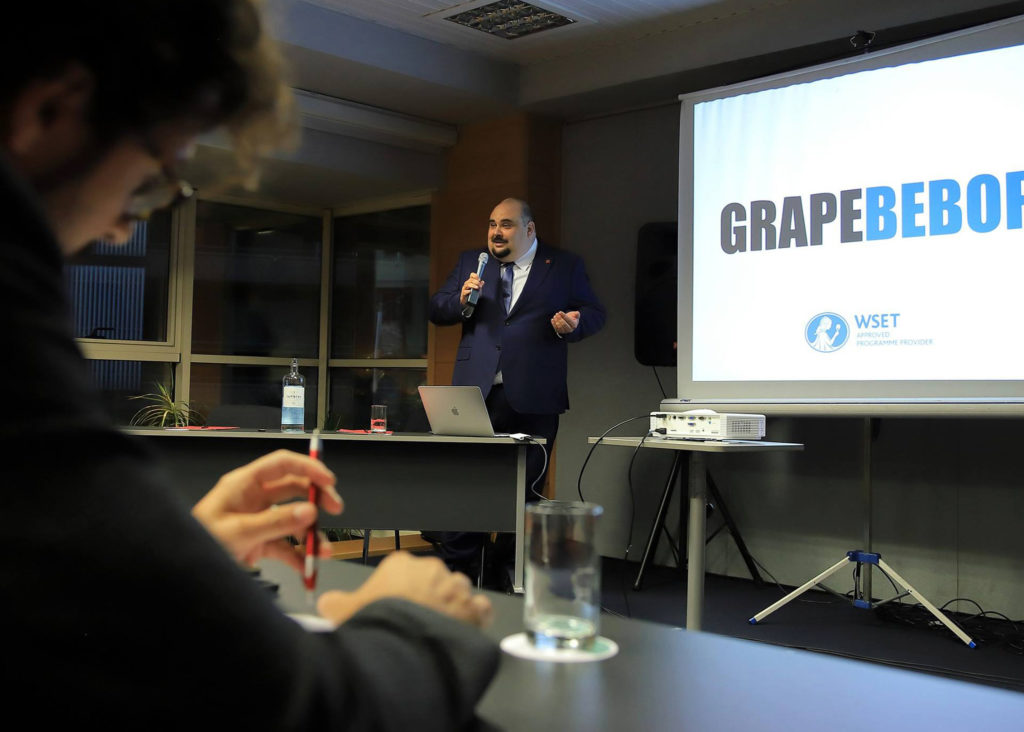
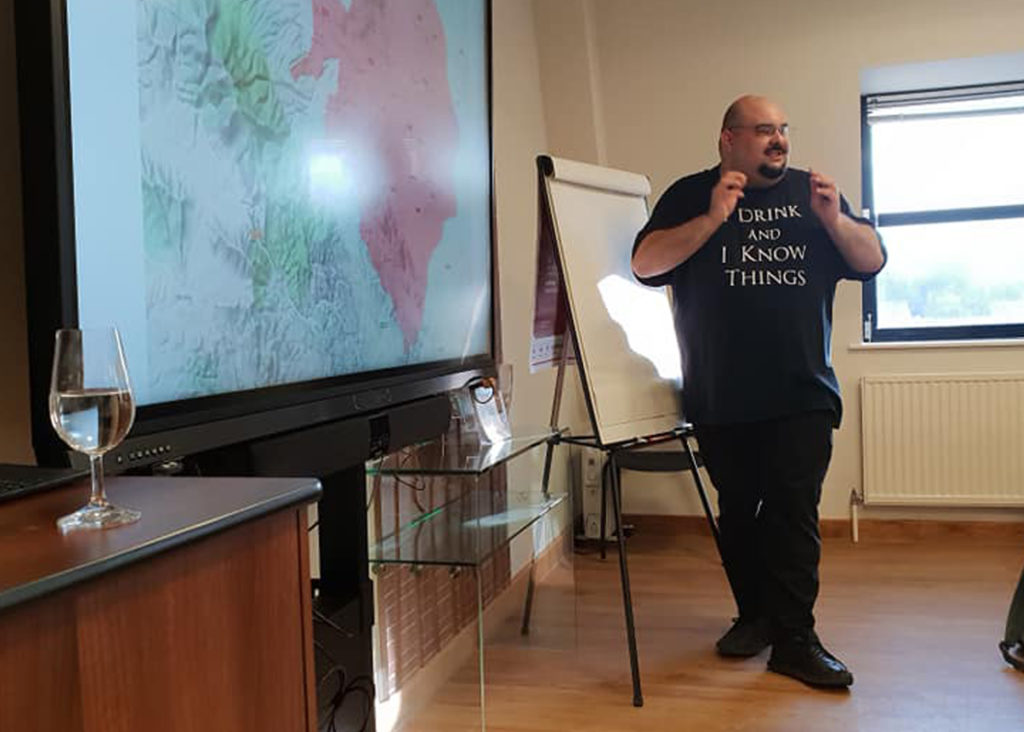
He has trained 687 students, tasted wine from 55 wine-producing countries and 679 designations of origin, and 296 grape varieties. Jorge Orte Tudela from Aragón has achieved this extraordinary record in just seven years.

Where does your passion for wine come from?

I do not come from a family of vintners, and at home, they only drank wine at celebrations. Always the same brands of red and sparkling wine, the kind that everyone knows. If I am looking for a turning point, it is when I was about twenty-two years old. I remember I was rereading “The Three Musketeers” and it turns out that they spend almost more time holding the bottle than the foil. Reading descriptions of what they were drinking made me want to drink some wine. I went down to the nearest supermarket and bought a Somontano Merlot from the 1999 vintage. The rest, as they say, is history, although my interest grew very little by little until my thirties years, which is often the age around which we amateurs begin to go to tastings.

Due to your good results in obtaining the WSET Level 4 Diploma in Wines & Spirits (Wine & Spirit Education Trust) as a student, you were awarded The Vintners’ Scholarship, an award given annually to the best graduate student in the United Kingdom. What has this award meant in your career?

To tell the truth, not much. It is a very prestigious award that has been obtained by many people who later became Master of Wine, as well as wine critics and books writers that today are the subject of study, but nobody in Spain knows it. In fact, although technically it is the best graduate in the UK, in my time there, we graduated more than ninety-five percent of students from Europe. In the United Kingdom, it is quite respected, and internationally it contributed to the fact that a private University in Manila specialized in hotel and restaurant management would hire me to teach courses there in the Philippines, although unfortunately they did not manage to enroll enough students.

Here it gives me a bit of prestige when I introduce myself to the students in class and explain my professional background before starting the course, but the truth is that I do not feel very comfortable with self-promotion and less when it is necessary to go into detail to be understood, so I only mention it in passing.

Fotos: Gabriel Orte Teruel (Gabi Orte Chilindrón)

Orte obtained in 2015 the WSET Level 4 Diploma in Wines & Spirits (Wine & Spirit Education Trust) after passing all the exams on the first attempt. Due to his extraordinary results, he was awarded The Vintners ‘Scholarship during the graduation ceremony in January 2016, an award given annually to the best graduate student in the United Kingdom, the second most prestigious award after The Vintners’ Cup, awarded to the best student of the world.

He had previously been awarded The Amorim Scholarship, awarded to the student from Europe with the best results in the subject of wine production. Jorge has travelled to many of the most reputed wine regions in the world. He is a great connoisseur of international markets due to his experience as an Export Manager.

Besides, he has been a judge of the International Wine Challenge of London since 2014, the International Wine & Spirits Competition since 2017 and the AWC Vienna since 2018, and has collaborated with the Regulatory Council of the Protected Designation of Origin Campo de Borja and Aragón Exterior in the promotion of Aragonese wines in London. He is also a certified trainer of Jerez wines (CRDO Jerez-Xérès-Sherry) and a cava trainer (Institut del Cava).

"As a producing country, we tend to overestimate our strengths and underestimate those of other countries. If we do not understand the international market, we cannot understand the relevance of what is ours and that of others"

You are a WSET teacher and thanks to you many people have already obtained the desired certification. What advice do you always give your students?

I always advise getting rid of prejudices and biases from the first moment. As a producing country, we tend to overestimate our strengths and underestimate those of other countries. We are surprised that this or that region of Spain is not mentioned and we do not understand why this or that of Australia is mentioned. To the Australian it will happen the other way around. If we do not understand the international market, we cannot understand the relevance of what is ours and that of others. The aim of the course is not to explain the market, but the composition of the course outline is a reflection of it.

I also stress how important it is to evaluate wines objectively, regardless of our personal tastes, trends and commercial positioning. It is more difficult with wine amateurs, even if they are also professionals, because we tend to drink better and better wines and we forget that there are very modest and inexpensive wines that are more than drinkable. If from time to time we buy a very low-priced wine and have lunch or dinner with it, so to speak, we “recalibrate” our quality scale. Unfortunately, I don’t think I am as successful in this last matter as I am in breaking down prejudices. It is particularly important for professionals, the amateur who does not work in the sector can say what he or she wants, but the professional needs to be more objective.

Finally, I try to explain that, in the world of wine, the more you learn, the less you know. If my students finish the course with more questions than when they started, it means that I have done my job well, even if it seems otherwise. This is something that is difficult to teach, and that you learn over time if you do enough research. Even if you learn later, you have to really assimilate it. I discussed it with some microbiology doctors from a Basel pharmaceutical company, for whom I did an informal tasting. They were praising my knowledge about wine and I told them the same thing; that the more I learn the less I know. I was very relieved when they told me that exactly the same thing happens in science, and that it is usually indicative that you are really beginning to understand the subject.

"We tend to drink better and better wines and we forget that there are very modest and inexpensive wines that are more than drinkable"

What are the concerns that your students show when it comes to wanting to obtain the certification?

It depends. I have students with many backgrounds: there are managers, sales directors, marketing, communication, wine tourism, and sales people of national and international distribution, shop assistants, winemakers, sommeliers… and amateurs without any professional link to wine. Everyone has different reasons for getting certified, so generalizing it’s difficult.

They often seek to learn more about wine, because in Spain it has traditionally been thought that the one who has to know about wine is the winemaker and the sommelier, and when it comes down to it, everyone who works in the sector needs to know the product, and not just theirs.

Winemakers are usually more interested in broadening horizons and learning about regions and varieties with which they are not so familiar with. Sommeliers are often looking for a complement to their training and a prestigious certification.

When working with such heterogeneous groups, my challenge is, without leaving the training program, trying to give the most customized approach possible. If many people related to management are attending, marketing and sales, I feel at ease and I can give them practical examples, thanks to my experience as an export salesperson. When I deal with people more related to the elaboration I tend to be more technical, whereas when I deal with sommeliers I tend to make more appreciations about the trends in the restoration of big cities like London, New York, Hong Kong or Tokyo.

The truth is that more than the initial concerns, I find their final concerns more interesting. Almost all students end up with many prejudices and broken myths, and their global vision of wine changes substantially. It is a process that I can see from the blackboard as the course progresses.

You have travelled through the most important wine regions in the world. Which one has caught your attention the most?

Don’t you dare posing that question! Which has NOT caught my attention? It is like asking for your favourite region or grape variety.

If we are going to be “conventional”, I find the diverse areas of Santa Barbara County (California) particularly interesting, particularly its Syrah and Pinot Noir. The entire Western Cape area in ​​South Africa is very exciting with its constant wine revolutions. I would stick with Hemel-en-Aarde and Elgin’s Chardonnay and Pinot Noir, and the red and white blends and endless experiments from Swartland, but stick with that’s not doing justice to all that the Cape has to offer. I also have to mention that Portugal, the whole country, is worth paying a lot of attention to. We have it next to us and we do not know what we are missing. I love Greece too, but I have not had the pleasure of visiting its wine regions yet.

If we are going to be more “extravagant”, the whites of Georgia once again turned everything they thought they knew about wine upside down. It is a world by itself that very few really know.

"In Spain it has traditionally been thought that the one who has to know about wine is the winemaker and the sommelier, and when it comes down to it, everyone who works in the sector needs to know the product, and not just theirs"

Jorge Orte with Claudio Herrero (left), secretary of the Regulatory Council of the PDO Cariñena, and José Ignacio Gracia, secretary of the Regulatory Council of the PDO Campo de Borja.

What do you think of Aragons wines?

That they are very polarized. On the one hand, we have wines with excellent value for money, usually produced in very large volumes, which are pleasant and satisfying. On the other hand, there are very exciting projects, carried out almost always by small producers, who are committed to high quality, innovation, new trends, and wines with a lot of personality.

In general, we are doing well in our commitment to Garnacha. In fact, I think we need to work more on the white and grey Garnacha. The Cariñena (Carignan) variety is also interesting and we are just beginning to pay attention to it, and there are more semi-forgotten native varieties that we would have to experiment more.

You usually collaborate in the promotion of Aragonese wines abroad. Which feedback do you get from foreign buyers and consumers?

Interestingly, buyers know us more than we might believe, but for reasons that generally do not suit us: large volume and low price. In each of the most important supermarket chains in the United Kingdom, there is Aragonese wine, but, with few exceptions, it is labelled as a supermarket white label. As anecdotes, the first day I went into a supermarket in Napa (California), the first wine I saw was from Calatayud, many boxes stacked for a bargain. In addition, Mr. Otaki, in charge of quality control at Château Mercian (Japan), told me about the Zaragoza Tube because years ago he came from time to time to buy wine in bulk for the Kirin group.

More interesting is the image that we can transmit if we do appropriate promotional work, knowing the taste of the market and making a correct selection of wines that reflects the different styles that we can offer, and not imposed by particular commercial interests. More interesting is the image that we can transmit if we do adequate promotional work, knowing the taste of the market and making a correct selection of wines that reflects the different styles that we can offer, and not imposed by particular commercial interests.

Many of those attending the masterclasses that I have taught have been surprised by the quality of our wines, and it is not that they did not know Aragón as a producer, it is that they had the idea that we produce wines of “good value for money”. If they are offered the right wines and explained why they are the way they are, we have the opportunity to change their perception, in the same way that my students change theirs, regarding the wines of certain countries.

If we do not know what makes Campo de Borja, Calatayud or Cariñena different, which are relatively close to each other and work with similar varieties (that is why I do not mention Somontano, which is another story), we can hardly create interest in our wines. I still remember the astonished face of an student when I mentioned the vineyards in altitude and he asked me, skeptically, what I understood by “altitude” and I replied that 900-1,000 meters are not rare in Calatayud. He was amazed; I think he thought Aragón was very flat. Explaining these things is more important than telling “the story of Uncle Paco who planted a vineyard.”

How would you define Aragon’s wines?

In many respects like the Aragonese themselves. In general, we are intense, it takes a while to get to know each other, but then we like each other and are considered loyal. I guess our wines tend to be more or less the same.

"In Aragón we are doing well in our commitment to Garnacha"

"Buyers know us more than we might believe, but for reasons that generally do not suit us: large volume and low price. If they are offered the right wines and explained why they are the way they are, we have the opportunity to change their perception, in the same way that my students change theirs, regarding the wines of certain countries"

Fernando Mora

Fernando Mora, first Master of Wine from Aragón

"The wines of Aragón are a combination of lands, people and tradition"

Feeling passion for what you do, it is not enough to be the best, but someone who loves your work. If we add study, effort, struggle, perseverance and, above all, conviction and time to that passion, you make a difference. That is the case of Fernando Mora, from Zaragoza, Aragonese Master of Wine and great passionate about terroir, wines and viticulture techniques from different areas of the planet, although, as he says: «I have always been in love with Aragón and when I started to get to know our vineyards in the area, the stories of the people and the wineries, I wanted to stay here even more».

Mora has travelled all over the world praising our wines and carries the Garnacha as his flagship: «we have to be proud of the wines of Aragón for several reasons. When you do something and you do it well, you have to be satisfied with it, because when it comes to wine, for example, we manage to fix the population in the territory. In other words, anything that is good for the agri-food industry prevents people from leaving and creates jobs and value. We ensure that the countryside and the mountains do not become unproductive and are abandoned. And, above all, we should be very proud of all those generations who, over long periods, have invested time and money in creating a wine industry, which we can take advantage of and continue. The wines of Aragón are a combination of lands, people and tradition».

His tenacity and interest in knowing everything about wine, led him to obtain, in just three years, the prized title of Master of Wine that only 380 people around the world hold: five are in Spain and two of them make wine in Aragón. Without hesitation, he changed engineering overnight for the broad knowledge and freedom that the land and the vine gave him.

Mora recognises that he has spent many weeks away from home in the last five years. «In 2016 I was 35 weeks away from my house, either to study the Master of Wine or to sell the wines. Honestly, how they welcome Aragonese wine depends a lot on the markets. Aragón is known for its mid-range or entry-level wines, because we have very good fruit for those qualities. It costs us very little to produce good grapes and achieve mid-range wines, but as soon as we go up to the top end of the range, we are still unknown. There have been projects like Alto Moncayo that have obtained a lot of recognition, but that is an exception. The reality is that in many countries Spain, Rioja, Cava, Jerez and Tempranillo are the words they know. And lately, Garnacha can also be added, but there is a long way to go before they understand what is really produced in Aragón».

"We should be very proud of all those generations who, over long periods, have invested time and money in creating a wine industry, which we can take advantage of and continue"

His first project was Latidos de Vino, which he launched together with his friends Aitor Ágreda, Gonzalo Valero, the winemaker Mario López and the international lawyer Francisco Latasa. «We even presented it in Manhattan. It was a great learning experience» Mora says. «We worked in underground cement winepresses, a large stainless tank or two, and a manual bottle-to-bottle bottling machine. We launched the wine at a price that competed with large wineries, and then we realized that it was impossible. So we took one of the oldest vineyards that Mario’s family was working with, we vinified it separately in barrels without a lid and with this we got a wine that we call Frontonio», recalls the Master of Wine, who says that the name was chosen by the sommelier Jesús Solanas, another singular talent we have in Aragón.

«Solanas told us the legend that Frontonio was a martyr whose head was cut off and it was found upstream instead of downstream. So we decided to call ourselves that because we always go against the current», assures Mora.

Frontonio was the first wine they managed to include on the menu of a restaurant with two Michelin stars: Mugaritz, thanks to Guillermo Cruz, one of the best sommeliers in Spain and a young Aragonese talent, who values ​​Aragón around the world.

«This wine was worth five, six or seven times more than the wine we were selling so far. Then, we discovered that there was a small, tough and difficult market in which you could make things of value, position them in the market, and be proud of doing it. Because we make this wine in a barrel without a lid, putting the grapes inside, doing it in a different way than what we were used to», says Mora.

One of the secrets of the success of the team made up of Fernando Mora, Mario López and Francisco Latasa has been to learn from many techniques and tools from outside and then put them into practice in their projects in Aragón. «We have managed to tread about 10.000 kilos on foot and I have been to 80% of the world’s wine-growing areas. Study and work have always gone hand in hand. Clay, cement, wood and stainless steel are tools, so you have to know which grapes and which wine you have, in order to know where to place them, to get the best out of them.  Wine is not a living being, but we work with it as such, since what it needs is to breathe», he points out.

"Study and work have always gone hand in hand. Clay, cement, wood and stainless steel are tools, so you have to know which grapes and which wine you have, in order to know where to place them, to get the best out of them"

THE ESSENCE OF ARAGÓN

Mora tells how in 1898, the wealthy people planted in the lower parts of the slopes and the poorest in the higher parts, because they were the ones that were not cultivated due to their difficulty. Only vines, olives and almond trees could be planted on poor land. At that time, he says, Valdejalón was the wine-growing area of Aragón where most grapes were produced. «People planted here because they knew it was the best place: the poor soils with the most difficult exposures». One of Mora, López y Latasa’s emblematic projects was born from these places: the Jardín de las Iguales, located in the Zaragoza town of Alpartir, where centenary vineyards of Garnacha and Macabeo coexist in Precambrian lands with unique slates. «Two wines are produced here: a white one made with Macabeo and a red one made with Garnacha and other planted varieties. They are very special wines that are aimed at a very exclusive audience and we are fortunate that the most important wine guide in the world, Robert Parker’s, has scored them, in its latest edition, with 96 points, which means that they are the best rated wines of our land and we are very proud of this », says Mora.

Fernando Mora says that the uniqueness of these wines is that when you smell a Garnacha that has grown in the Jardín de las Iguales, you feel a more ethereal, more energetic wine, with more notes of tea leaf, thyme and flowers, with much less color and in which the wood is hardly noticeable.

For them, it is one of those small vineyards that are worth visiting and they are proud to be able to recover the tradition of this valley. “We look back in order to move forward, that’s why we make wines in the traditional way as they were made before, but with the knowledge we have today. This vineyard is 11 hectares, but only 1.7 hectares are used for the Jardines de las Iguales and for the 2018 vintage, which is the one now on the market, we have produced 1,000 bottles of white wine and 587 bottles of red. These are small productions that we sell by quotas and that are destined for different countries. In addition, we have positioned them in the best restaurants in the world such as El Celler de Can Roca, Martín Berasategui, ABaC or Tickets, among others”, he concludes.

"We look back in order to move forward, that’s why we make wines in the traditional way as they were made before, but with the knowledge we have today"

Fernando Mora MW y Mario López

If he had to make wines outside of Aragón, Mora recognises that he would love to do it in Borgoña, Piedmont, Ribera Sacra, Douro or Priorat. «Borgoña is the area that for me makes the most elegant wines in the world. Sometimes they are misunderstood because they have little color, little alcohol, but less is more. And as for the others, they are mountain areas with slopes, dry walls, terraces, which are parts of the elements that fascinate me about wine», he replied.

Aragón is felt on the web. Fernando Mora is a wine «Influencer» on social networks. His live streaming on Instagram during the confinement became a meeting point for thousands of professionals and wine lovers, from all continents, who have chatting with him daily, sharing their experiences and generating interesting debates about the culture of wine in the world.

Aragón is felt on the web. Fernando Mora is a 'wine influencer' on social networks

Currently, Mora makes its mark in Aragón, through three different projects: Frontonio, Cuevas de Arom and the Jardín de las Iguales, with wines made in several prestigious wine-growing areas of our region such as: Valdejalón, Calatayud or Campo de Borja. From Aragón Alimentos, we wish you to continue to continue to be successful and highlighting Aragón as a land of wine and talent.

Familia Ramón

Ramón Family, owner of Bodega Aylés

"The process of recognition as a Vino de Pago was long and complex, but also very exciting"

Where does your passion for wine come from?

The origin of our passion for this world comes from my father: Federico Ramón. He was the creator and promoter of the Vino de Pago Aylés. He knew how to transfer the passion he felt for the countryside and for his land to his family and put all his enthusiasm in this project, which involved a lot of effort and sacrifice over a very long period of time

What does it mean to run a winery, unique in Aragón, that makes single-vineyard wine?

The project was very exciting from the beginning. It was an exciting challenge for all of us who work in the winery and at the same time, a very great responsibility as it is a quality status recognized by law and much stricter than the wine Designations of Origin.

There were very complicated moments as the recognition process for Vino de Pago Aylés was very long and complex. A whole research work, unique studies like never before carried out in the area, endless conversations with the Administration which, finally, approved the Regulation of Vino de Pago wines in Aragón. Of course, we have also had exciting moments in which all of us who are behind this adventure have enjoyed a lot.

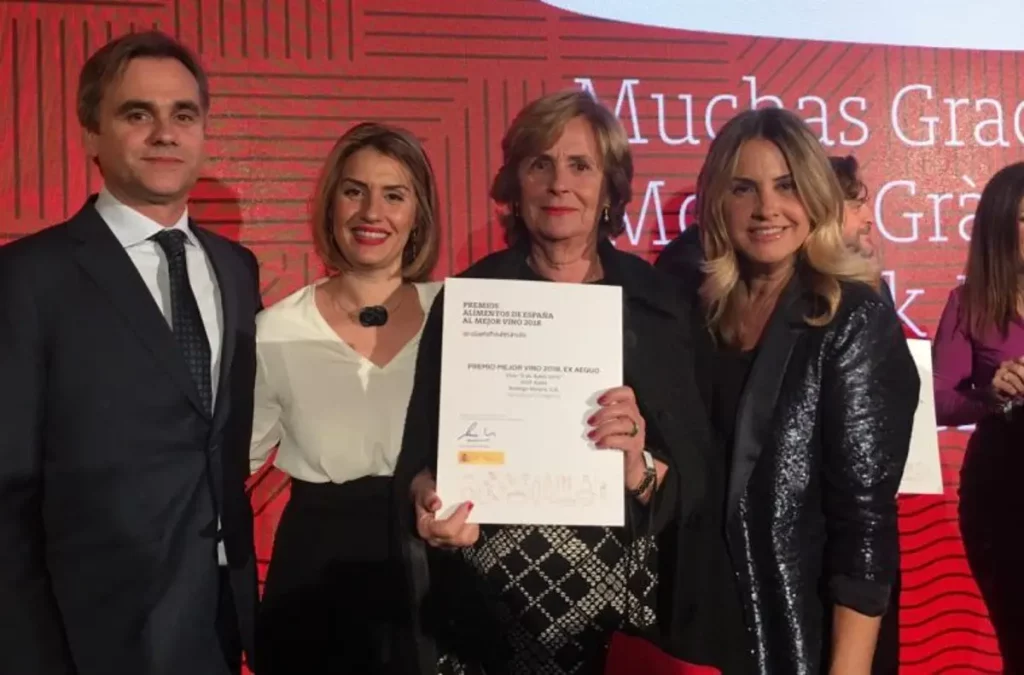
Your wines have won and continue to win numerous awards, although there has been one of great importance: the appointment, in 2018, of Aylés “S” wine as the best wine in Spain. What does it feel like at that moment? Has this award brought you more recognition at the national, international and consumer level?

First, we are very proud, as it is yet another triumph for Garnacha from Aragón. We were delighted, as it was a recognition of the effort and work that our family has been doing for almost 30 years.

We received this very important “Alimentos de España” Award for the Best Wine of the year 2018 from the Minister of Agriculture, Fisheries and Food, Luis Planas, in a beautiful gala at the Palacio de Fomento in Madrid.

As it was an institutional recognition, it was a highly publicised award, but it is a wine that gave us great joy from the very first vintage we made. Our initial objective was to try to achieve the true character of the variety, which combines elegance, freshness and longevity. From a typicity point of view, it is one of our most special wines.

Aylés is the only Vino de Pago (single-estate winery) recognized in Aragón and one of the only 20 Vinos de Pago recognized in Spain. After years of studies in soil, climate, winemaking methods, organoleptic, physical and chemical analyses, the Ramón family’s wines obtained in 2011 the precious recognition.

A Vino de Pago is currently a wine covered by a Protected Designation of Origin (PDO), whose geographical area is a Pago. A Pago is an area with its own characteristics of soil and climate, known by a name traditionally associated with the cultivation of vineyards. This wine can use the term Vino de Pago instead of Protected Designation of Origin.

The winery is located in the Zaragoza municipality of Mezalocha, where the characteristics of this territory, the nature of its soils, the fields and roads that border the estate, the fauna and flora make up a combination of attributes that give Aylés wines a unique personality.

What is the job that each of you carry out in the winery?

Pago de Aylés is a family winery. It was started by our father, Federico Ramón, and nowadays it is run by the three siblings: Federico (Financial Director), Ana (Quality Director) and Inmaculada (Winemaking Director).

What do you expect from your wines?

We are trying to communicate and value the concept of Vino de Pago, as it is something unknown to most consumers. Besides, we are working hard to keep on convincing of the quality of our single vineyard wines

Has the practice of sustainable agriculture already led you to have your vineyards certified as organic?

Of course, after many years of practicing sustainable agriculture, we decided to start in 2016 with 100% organic agriculture. We have been seeing a different evolution in the terroir of the estate that has given us a plus of complexity in the soils, being able to translate it into wines that are different in style from those we made in 2010. The conservation and improvement of the soils are at the centre of the strategy.

We are working to make our ecosystem more complex and robust. By eliminating chemical synthesis compounds, we are increasing the number of herbaceous spices present in the ecosystem and, in turn, greater complexity in the populations of insects, small vertebrates and birds, without disregarding the increase in soil life, fungi and bacteria.

Our firm commitment to the conservation of our environment, together with our vocation to increase the quality of our products and totally eliminate waste, has led us to certify our wines as organic.

"Our firm commitment to the conservation of our environment, together with our vocation to increase the quality of our products and totally eliminate waste, has led us to certify our wines as organic"

What is special about your wines?

By definition, a Pago is a place or rural site with its own edaphic and microclimate characteristics that differentiate it and distinguish it from others in its surrounding, linked to the cultivation of vineyards and from which wines with unique features and qualities are obtained.

The grapes for these wines must come from the vineyards located on the Estate (Pago) and the wine must be made, stored and aged separately from other wines. For its control, a quality system is implemented that audits from grape production to the release of the wine on the market.

Vino de Pago are identified with specific sites that enjoy exceptional conditions resulting from the land and the landscape, which translates into special products due to the added value provided by the land they come from.

How many hectares does the vineyard occupy in the Estate and what varieties are used?

They are a total of 50 hectares with a combination of national varieties (Tempranillo and Garnacha) and foreign varieties (Merlot and Cabernet Sauvignon) and soils rich in clay and pebbles that provide concentration to the grapes from old vines.

"Vino de Pago are identified with specific sites that enjoy exceptional conditions resulting from the land and the landscape, which translates into special products due to the added value provided by the land they come from"

Are you already working on future projects?

Sure, far away is the time when wineries simply had to worry about making a good product and establishing its distribution network.

Nowadays, and even more so with the COVID-19 pandemic, a new reality is emerging with a change in consumer behaviour towards leisure and consumption. Aylés is in the process of interpreting these trends and adapting to them.

The Ramón family recognizes that Aylés «is not just a winery» and defines it as «a well-defined territory in which nature and wine coexist in a very special way. Clay, limestone and calcareous soils give essence to this environment of deep caves and underground rivers. Undoubtedly, an authentic Pago with its own characteristics that differentiate and distinguish it from others in the area».

"Aylés is not just a winery, is a well-defined territory in which nature and wine coexist in a very special way"

Familia Navascués

Navascués Family, a life around the wine of Aragón

Navascués: history, flavour and taste of wine

When one thinks of the Navascués surname, only one word comes to mind: wine. And the fact is that this family, purebred Aragonese, has been linked to the world of winemaking for many generations and day after day continues to leave its mark, wisdom and know-how, advising many wineries in Aragon and beyond, and creating excellent wines that we then enjoy tasting. They are Jesús Navascués, Jorge Navascués and Mariano Navascués.

Although the story goes back a long way, the one closest to our times is that love triumphed between two great wine lovers. Precisely when one of them, Jesús, went to Requena to study oenology. He, the son of a master winemaker who worked at the Cooperativa San Juan Bautista -currently Bodegas Aragonesas- came from the Zaragoza town of Fuendejalón (Protected Designation of Origin Campo de Borja) and she, María Amparo, daughter of a family with close ties to the world of wine, was from the Valencian town of Requena (Designation of Origin Utiel – Requena), where “they have more vineyards than we have in all of Aragón”, said  Mariano Navascués.

Love triumphed in Valencian lands, but it developed, lived and settled in Cariñena, where Jorge and Mariano were born. Jorge has followed in the footsteps of his father and grandfather, where after so many years of experience and professionalism he is being considered one of the best winemakers in Aragón, and Mariano decided to dedicate himself to the world of communication since, as he says, «I have always liked to tell things and if they are related to the world of wine, the better. With my work I help to give visibility to projects and wine brands in Aragón, with a view to achieving all their goals. Like, for example, gaining a foothold in the market».

For Jorge, talent is associated with youth and he warns: «Aragón has a great heritage of talented people. My father told me a phrase years ago that I will never forget: “You have to go around a lot in Spain to find an area like this in the world, it has a winemaking potential that we don’t know about.” We have to value the true heritage that exists here through the people, the culture, the landscape and, above all, the experience. This community has thousands of stories and people come and go».

"You have to go around a lot in Spain to find an area like this in the world, it has a winemaking potential that we don’t know about"

For the Navascués brothers, the great example of their life and of their day-to-day is their father, Jesús. «He is a man who has many dozen vintages behind him. He has been advising wineries in Cariñena, Somontano, La Rioja, Navarra, Tenerife… My father has set us an example and has instilled in us that perseverance, seriousness and rigidity at work are essential to carry out everything we set out to do. We are very proud of him and very grateful for all that he has taught us and continues to teach us every day. He is one of those people who loves wine so much that he is virtuous in what he does. My brother and my father understand each other perfectly without using words, they make an impressive team», says Mariano.

For the Navascués family “it is everything”. «It is our home and our DNA. Our veins, as if they were vines, are deeply rooted in this land. We are from Cariñena, my brother and I were born there, and we are very attached to the territory. In addition, through my work in the program Chino Chano, on Aragón TV, with which I have been travelling all over the region for 13 years, I have realised that Aragón is more than a territory, it is a feeling. For us, Aragón it is the place where we live, we take care of, we defend and the place we love”, Mariano pointed out.

As for wine, Jorge says that Aragón is in a “sweet” moment and that there are wines with more visibility than ever. “We have a union between all parts of the sector that is enviable for many people. I have taken advantage of the time of confinement to study all the gurus of this country and more than one has spoken of the great potential that Aragón has. We have four Spanish sommelier champions. We have two of the six Master of Wine who live in Spain residing in Aragon. We have a very nice potential ahead of us, because we make wines that can be at the level of great regions. I think that the sweetest moment in Aragon for it to be communicated and known is now, because of the union that exists between the different parts of the sector and because there is optimism, joy and enthusiasm. Moreover, we have removed that inferiority complex that we had. Now we are waking up. If all of this can be united into one thing, it is now. We are 10% of where we can get to, but, above all, without forgetting where we come from: everything we have experienced lived and learned over so many years”, Jorge Navascués stressed.

Aragón has a wine heritage that goes back thousands of years. According to Jorge, his DNA has allowed him to understand wine in its context and understand that the territory must be valued, but “to leave it to those who come behind after is.” «Aragón is in a great moment to be able to open up to the world, but without complexes and realizing that this is where we come from. There is a phrase by Álvaro Palacios that I think we can extrapolate to the moment Aragón is living right now: ‘they are waiting for us”, he said.

At the moment, a project is underway, in which Mariano Navascués is immersed, linked to the world of wine that can be a turning point in winemaking training in Aragón: Aragón Wine Expert

It is an initiative that was born with the intention of disseminating and promoting knowledge of all the wines and areas that exist in Aragon, so that people get to know them better. “There is a very good phrase that says that you only love what you know, so let’s get to know the wines, so that we can love them more and defend them with more momentum”, concludes Mariano.

"Aragón is more than a territory, it is a feeling. For us, Aragón it is the place where we live, we take care of, we defend and the place we love"

"We have a union between all parts of the sector that is enviable for many people I think that the sweetest moment in Aragon for it to be communicated and known is now"

"Aragón is in a great moment to be able to open up to the world, but without complexes and realizing that this is where we come from"